Storing lyophilised peptides: cold, dry, dark, sealed
Temperature, moisture, light, warming before opening, aliquoting: how peptide manufacturers describe laboratory storage of lyophilised peptides.
3 min read
- storage
- lyophilisate
- lab practice
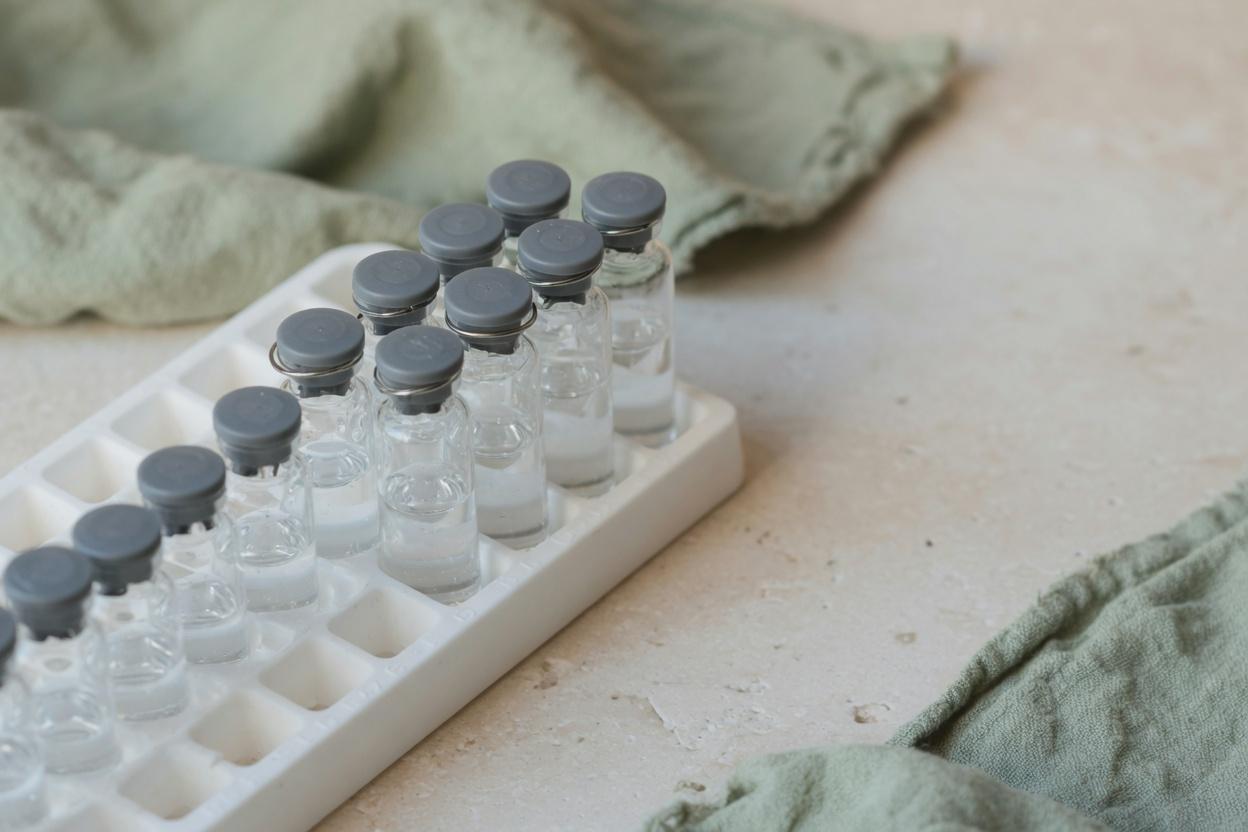
Store lyophilised peptides cold, dry, dark and tightly sealed. Before opening, let the closed vial reach room temperature in a desiccator, then weigh out quickly and close it again. That is how the peptide manufacturer Bachem describes it; JPT gives similar temperatures and also advises dry storage. Where the label or certificate of analysis gives its own storage conditions, those apply to that material.
Temperature
The manufacturers give slightly different values:
| Situation | Bachem | JPT |
|---|---|---|
| Longer storage | below −15 °C, lower temperatures preferred, −50 °C or colder for long-term storage | −20 °C to −80 °C |
| Short term | a refrigerator at 4 °C is acceptable | not stated |
Both agree on one point: for storage over a longer period, the lyophilisate belongs in the freezer. Bachem also notes that peptides containing asparagine, glutamine, methionine, cysteine or tryptophan have limited shelf lives.
Moisture
Peptides are hygroscopic: they take up water from the air. According to Bachem, absorbed moisture lowers the peptide content and may reduce stability. This also affects analysis: water adds to the weighed amount but is not peptide. Why that matters for peptide content is covered in HPLC purity explained.
Bachem describes the steps for taking material out like this:
- Take the closed vial out of the cold.
- Let it reach room temperature in a desiccator before opening.
- Weigh out the amount you need quickly.
- Close the vial tightly straight away and put it back in the cold.
JPT also recommends keeping lyophilisates with a desiccant or in a desiccator.
Light and oxygen
JPT advises keeping lyophilisates in the dark or in amber vials so that light does not degrade them. Against oxidation, JPT recommends airtight containers, ideally under vacuum or under an inert gas such as nitrogen.
Portions instead of repeated thawing
Every opening exposes the material to ambient air. JPT therefore recommends dividing dry peptides into single-use vials. According to JPT, repeated freezing and thawing can cause degradation through microcondensation.
So if you receive a larger amount, divide it once and then take a whole vial each time. The other vials stay closed.
Dissolved peptides
Bachem advises against storing peptides once dissolved, even sterile and oxygen-free, because they degrade chemically over time. Where it cannot be avoided, dissolved peptides should be divided into portions and frozen below −15 °C.
Retest date and certificate of analysis
A certificate of analysis may state an expiry or retest date. The GMP guideline ICH Q7, written for the manufacture of medicines, defines the retest date as the date when a material should be examined again to confirm it is still suitable. Under ICH Q7, stability testing confirms the storage conditions as well as expiry and retest dates. So store material as the label or certificate states. Which other dates a certificate carries is covered in Reading a certificate of analysis.
After delivery
Novo Labo ships with DHL to Germany and Austria. Unpack the delivery when it arrives and move the material into the storage named by the label, the certificate or the manufacturer guidance above. All products are sold strictly for laboratory and research use.
Sources
- Bachem, Handling and Storage Guidelines for Peptides, read 28 October 2026. Temperatures, desiccator, quick weighing, peptides with limited shelf lives, dissolved peptides.
- Bachem, Care and Handling of Peptides, 23 January 2021, read 28 October 2026. Storage below −15 °C, moisture and peptide content.
- JPT Peptide Technologies, How to Store Peptides: Best Practices for Researchers, read 28 October 2026. −20 °C to −80 °C, light, inert gas, aliquoting, freezing and thawing.
- ICH, Q7: Good Manufacturing Practice Guide for Active Pharmaceutical Ingredients, version of 10 November 2000. Glossary (retest date) and section 11.5 (stability monitoring).
Prices and availability are in the shop. Go to the shop